

What to Fix on Your Website Before Running Any Paid Ad
Running ads to a broken website is the fastest way to burn your budget and conclude that "ads don't work." They do work. But they work by sending more people to whatever experience your website already creates. If that experience is slow, confusing, or unconvincing, paid traffic just accelerates your losses at scale.
Before you spend a single rupee or dollar on Google Ads, Meta Ads, or any other paid channel, go through this list. Every item here has a direct impact on whether your ad spend returns anything at all.
1. Your Website Takes More Than 3 Seconds to Load
Speed is not a nice-to-have. It is the single most important technical factor determining whether your paid traffic converts or bounces. Google's own research shows that 53% of mobile users abandon a page that takes longer than 3 seconds to load. When you're paying for every click, a slow website means you're paying for visitors who leave before they even see your offer.
Test your current load speed at PageSpeed Insights (free, by Google) and GTmetrix. Run the test on mobile, not just desktop, because the majority of ad traffic lands on mobile devices.

The most common speed killers are:
- Uncompressed images (use TinyPNG or Squoosh to compress before uploading)
- Too many plugins or third-party scripts running on every page
- Cheap shared hosting that throttles under traffic (consider upgrading to a VPS or managed hosting)
- No caching configured (install a caching plugin if you're on WordPress)
- Large video files embedded directly instead of hosted on YouTube or Vimeo
Aim for a load time under 2.5 seconds on mobile. Every second you shave off your load time directly increases your conversion rate from paid traffic.
2. Your Homepage Does Not Answer the Three Questions Visitors Ask in the First 5 Seconds
When someone clicks your ad and lands on your website, their brain asks three questions before anything else. If your homepage does not answer all three within the first screen (the part visible without scrolling), most visitors leave.
The three questions are:
- What is this? (What does this business do?)
- Is this for me? (Do I fit the customer this business serves?)
- What do I do next? (What is the obvious next step?)
Most websites answer the first question vaguely, ignore the second, and bury the third somewhere below the fold. A homepage headline that says "Welcome to ABC Solutions" answers none of them. A headline that says "Custom Kitchen Cabinets for Homeowners in Pune, Delivered in 21 Days" answers all three immediately.
Rewrite your headline before running a single ad. It is the highest-leverage change you can make to a website in under an hour.
What nobody talks about: The headline on your landing page and the headline in your ad need to match in tone, promise, and specific language. This is called message match. When someone clicks an ad that says "Affordable CA Services for Startups" and lands on a page that says "Comprehensive Financial Solutions," they feel misled, even if you offer exactly what they need. The disconnect kills conversions. Your ad copy and your landing page headline should feel like two halves of the same sentence.
3. You Have No Clear Call to Action (Or Too Many)
A website without a clear call to action is like a shop with no cash counter. People browse and then leave because there's nowhere obvious to go to actually buy or enquire.
But there's an equally common opposite problem: too many calls to action competing for attention. "Call us," "WhatsApp us," "Fill this form," "Download our brochure," "Follow us on Instagram," "Subscribe to our newsletter" all on the same page creates decision paralysis. When everything is equally prominent, nothing gets clicked.
Pick one primary call to action per page and make it impossible to miss:
- Put it in the top navigation bar
- Put it in the hero section (the first thing visible on the page)
- Repeat it after every major section of content
- Put it in the footer
Secondary actions (like following on social media or downloading a resource) should be visually subordinate. Smaller, less prominent, clearly secondary. One primary action drives far more total conversions than five equal ones.
4. Your Website Is Not Mobile-Optimized
In India, over 75% of web traffic comes from mobile devices. Globally the number sits around 60%. If your website was designed primarily for desktop and has not been properly adapted for mobile, you are wasting the majority of your ad budget on a broken experience.
Mobile optimization goes beyond just "fitting on a small screen." Check each of these specifically:
- Are buttons large enough to tap with a thumb without accidentally hitting something else?
- Is the font size readable without pinching to zoom?
- Does the menu work cleanly on mobile without overlapping or cutting off?
- Are forms easy to fill on a mobile keyboard (minimal fields, correct input types like number keyboards for phone fields)?
- Does the page scroll smoothly without horizontal overflow or layout breaks?
- Is your phone number a clickable tap-to-call link on mobile?

Test your own website on at least three different phones before running ads. What looks fine on your personal device may be broken on a different screen size or browser.
5. You Have No Trust Signals Above the Fold
Paid ad traffic is cold traffic. The person clicking your ad does not know you, has never heard of you, and has no reason to trust you yet. Your website has approximately 8 seconds to begin building that trust before they leave to find a competitor.
Trust signals are elements that tell a visitor "other people have used this business and it went well." They include:
- Client logos or "As seen in" media mentions
- A count of customers served, projects completed, or years in business
- Star ratings pulled from Google Reviews or other verified platforms
- Named testimonials with photos (not just anonymous quotes)
- Certifications, awards, or professional memberships
- A real address and phone number (not just a contact form)
At least one of these needs to appear above the fold, meaning visible without scrolling. If a visitor has to scroll down to find any evidence that your business is legitimate, many of them will not scroll that far.
What nobody talks about: Generic stock photos actively reduce trust. A smiling person in a suit who is clearly a Getty Images model signals inauthenticity to modern web users, especially younger audiences. Real photos of your actual team, your actual workspace, and your actual work convert significantly better than polished stock imagery. If professional photography feels out of reach, a decent phone camera in good natural light beats stock photos every time.
6. Your Contact Form Is Broken, Long, or Going to Spam
This one sounds obvious but it is shockingly common. Business owners run ads, pay for clicks, and have no idea their contact form has been broken for weeks. A plugin update broke it. The email it sends to goes to a spam folder. The submit button does not work on certain browsers.
Right now, before you set up a single ad, go to your own contact form and submit a test enquiry. Check that it arrives in your inbox within 5 minutes. Check that it does not land in spam. Repeat this on mobile.
Then look at the form itself. Every additional field on a contact form reduces the number of people who complete it. If you're asking for name, email, phone, company name, budget, project description, and how they heard about you before they've even spoken to you, most people abandon the form halfway. For paid traffic, start with three fields maximum: name, phone number or email, and one qualifying question. You can gather the rest in the actual conversation.
7. You Have No Tracking Set Up
Running paid ads without tracking is like driving at night without headlights. You're moving, but you have no idea what you're about to hit or whether you're going in the right direction.
Before running any ad, you need three things installed and verified:
- Google Analytics 4 (GA4): Tracks who visits your website, where they come from, which pages they view, and how long they stay. Free to set up. Takes 15 minutes.
- Google Search Console: Shows you which search terms people use to find your site organically, and flags any technical errors. Also free.
- Conversion tracking specific to your ad platform: If you're running Google Ads, install the Google Ads conversion tag and define what counts as a conversion (form submission, phone call, purchase). If you're running Meta Ads, install the Meta Pixel and set up conversion events. Without this, your ad platform cannot optimize for the people most likely to actually buy from you. It will just optimize for clicks, which is a very different and much less useful thing.
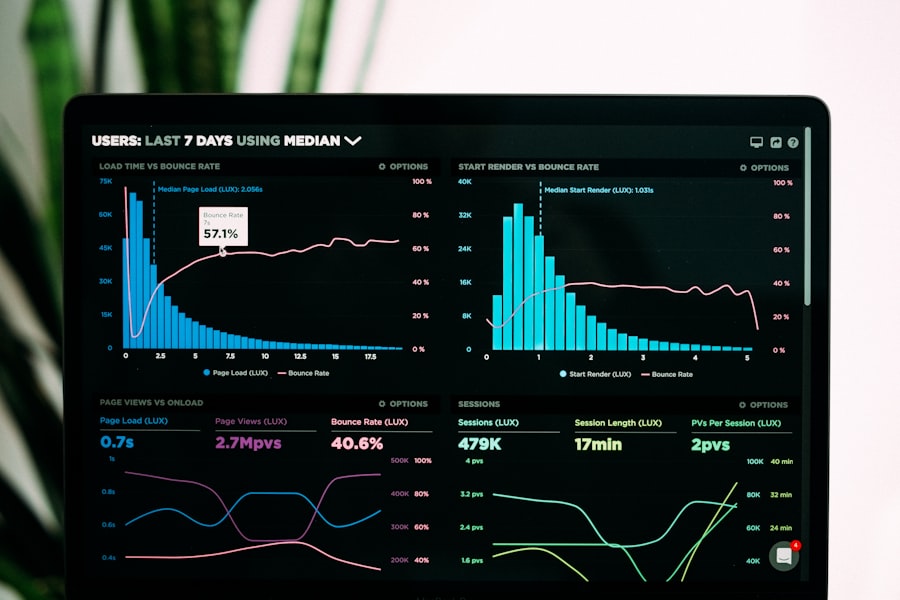
What nobody talks about: Most small businesses set up GA4 but never configure any goals or conversion events. So they can see that people visited the website but have no idea which visitors actually enquired or bought. This makes it impossible to know which ad, keyword, or audience is generating real business versus just generating traffic. Setting up conversions takes an extra 30 minutes but turns your analytics from a viewer-count tool into an actual decision-making tool.
8. Your Pricing Page (Or Lack of One) Is Costing You Leads
This is a debate in almost every industry: should you show pricing on your website or not? The answer depends on your business model, but there is a middle ground that works for almost everyone and most businesses are not using it.
If you cannot show specific prices (because your work is custom quoted), at minimum show a starting price, a price range, or what factors influence cost. "Projects typically start from Rs. 25,000 depending on scope and timeline" is more useful to a potential customer than "Contact us for a quote."
When someone comes from a paid ad, they have high intent. They are comparing options. If your website gives them no pricing information and your competitor's does, they will often choose the competitor simply because they can make a more informed decision. Price transparency, even approximate, builds trust and pre-qualifies leads so that the people who do contact you are genuinely within your target range.
9. Your Page Has No Urgency or Reason to Act Now
Most websites present information as if the visitor has unlimited time to decide. They do not. The average person who clicks an ad and does not convert will not come back unless you retarget them. If your page gives them no reason to act today, they close the tab and the moment is gone.
Urgency does not mean fake countdown timers or manipulative scarcity tactics. It means giving the visitor a genuine reason why acting sooner is better for them. Examples:
- "We only take on 4 new clients per month to maintain quality. Currently 2 spots are open."
- "Free site visit this week for enquiries received before Friday."
- "Our next available installation slot is [date]. Book now to secure it."
- "Prices increase by 12% from July 1 due to material costs."
Any of these, when true, gives a visitor a real and honest reason to take action now instead of later.
10. You Are Sending Ad Traffic to Your Homepage
This is the most expensive mistake on this entire list. Your homepage is designed for multiple audiences: returning customers, new visitors, job seekers, potential partners, and curious people. It tries to serve all of them, which means it is perfectly optimized for none of them.
Every ad campaign should send traffic to a dedicated landing page built specifically for that campaign's audience and offer. If you're running an ad targeting "wedding photographers in Jaipur," the landing page should be specifically about your wedding photography services in Jaipur, with testimonials from wedding clients, wedding photos in your portfolio, and a call to action about booking a wedding consultation. Not your general homepage with links to corporate events, family portraits, and your blog.
A focused landing page consistently outperforms a homepage by 2 to 5 times in conversion rate. Building one does not require a developer. Tools like Unbounce, Instapage, Carrd, or even a dedicated page on your existing website built with focus in mind will do the job.
What nobody talks about: The landing page URL itself matters for Google Ads Quality Score. Google evaluates how relevant your landing page is to your ad keywords and uses this to determine both your ad position and what you pay per click. A highly relevant, fast-loading landing page lowers your cost per click and improves your ad rank. A generic homepage does the opposite. Fixing your landing page can literally reduce what you pay for every click going forward.
The Pre-Ad Launch Checklist
Before approving your first ad, go through every item on this list:
- Website loads in under 2.5 seconds on mobile (tested on PageSpeed Insights)
- Homepage headline answers what you do, who it's for, and what to do next
- One clear primary call to action visible without scrolling
- Website is fully functional and readable on mobile
- At least one trust signal (reviews, client count, certifications) visible above the fold
- Contact form tested and confirmed working, with 3 fields maximum
- GA4, Google Search Console, and platform-specific conversion tracking installed and verified
- Pricing or price range information present somewhere on the page
- A genuine reason for the visitor to act now is present
- Ad traffic is going to a dedicated landing page, not the homepage
If even three of these are missing, your ads will underperform and you will likely conclude that paid advertising does not work for your business. It does work. But it works best when it sends motivated, qualified people to a website that is ready to receive them and give them every possible reason to take the next step.
Fix the foundation first. Then turn on the traffic.
Which of these is missing from your website right now? Drop a comment and let's figure out what to prioritize first.
You Might Also Like

Is Your Website Built for Google or Built for Customers?
A website should satisfy both search engines and customers. Learn how to balance...

Why Visitors Leave Your Site in Under 10 Seconds
Visitors make a quick judgement about your website. Discover the common reasons ...
