

The Real Reason Your Google Business Profile Isn't Showing Up
You set up your Google Business Profile (GBP), filled in the details, and waited. But when you search for your own business, it either shows up buried on page three, appears for no one but you, or (worst of all) it simply doesn't exist in Google's eyes. You're not alone, and the reasons go far deeper than "just verify your listing."
This guide covers everything: why GBP listings get restricted or suppressed, the hidden suspension triggers nobody warns you about, how Google's ranking algorithm really works for local search, and what the analytics are silently telling you that most business owners completely ignore.
1. Google Isn't Hiding Your Profile. Your Signals Are.
Google doesn't suppress listings out of spite. It suppresses them because its algorithm isn't confident enough in your business to show it. Confidence comes from signals, and most businesses are weak on almost all of them.
The three core local ranking factors Google officially acknowledges are Relevance (does your profile match the search?), Distance (how close are you to the searcher?), and Prominence (how well-known is your business online?). The dirty secret is that prominence is almost entirely driven by off-profile factors: citations, backlinks, reviews, and engagement. These are things most people never touch after creating the listing.

If your business is brand new, has fewer than 10 reviews, has no mentions anywhere else on the web, and your website has thin content, Google literally doesn't know if you're a real, active, trustworthy business. It will show more established competitors instead, even if you're physically closer to the searcher.
What to do: Build citations on platforms like Justdial, Sulekha, IndiaMART (for Indian businesses), or Yelp, Bing Places, and Apple Maps globally. Each consistent Name-Address-Phone (NAP) entry is a vote of confidence for Google.
2. The Verification Trap (And Why It's Not a One-Time Thing)
Many business owners verify once and assume they're done. But Google can re-require verification silently, especially after any of these:
- You edit your business address, even slightly
- Your category is changed
- Google detects a possible duplicate listing
- Your listing sits unengaged for an extended period
When this happens, your listing may continue to appear for a while before slowly fading from search results. There's rarely a notification. You'll only catch it by checking your GBP dashboard for a "Needs attention" or "Pending verification" badge.
Additionally, Google now uses video verification as the default for many new and re-verified listings. If you're asked to record a short video of your storefront or workspace and don't complete it promptly, your profile goes into limbo: visible to you but not to the public.
3. Suspensions: The Full, Unfiltered Picture
This is the section nobody writes about in enough detail. Google issues two types of suspensions, and they behave very differently.
Soft Suspension (Unverified / Not Publicly Visible)
Your listing exists in Google's system but is not shown on Maps or Search. This is triggered automatically by quality algorithms. Common triggers:
- Address doesn't match Google's Street View data (e.g., your office is in a building with no visible signage)
- Keyword stuffing in your business name (e.g., "Raj Plumbers Best Plumber Delhi 24/7")
- Using a virtual office or co-working space address without disclosure
- A large number of new reviews arriving suddenly (looks like review manipulation)
- Multiple GBP listings created for the same location
Hard Suspension (Profile Disabled)
This is a manual action. Google's Quality team has reviewed and disabled your listing. This is far harder to recover from. Triggers include:
- Operating a business that violates Google's guidelines (e.g., certain financial services, CBD, firearms dealers without proper classification)
- Repeated edits that violate guidelines after previous warnings
- Being flagged by competitors using the "Suggest an edit" or "Report a problem" feature repeatedly
- Misrepresenting your business type or services
- Your associated Google Account being suspended for other reasons
How to appeal: Go to the GBP Reinstatement Request form. You'll need to provide photo evidence of your storefront, utility bills, business registration documents, and a written explanation. Turnaround can be 3 to 14 business days. If rejected, you can escalate to the GBP Help Community, where Google Product Experts can sometimes push your case further.
Underreported fact: Competitor abuse of the "Suggest an edit" feature is a real and growing problem. If multiple users flag your listing for incorrect information, Google's algorithm may auto-apply those edits or suppress your listing, even if the flags are completely false. Monitor your listing weekly for unauthorized changes.
4. Restrictions That Are Not Suspensions
Between "fully visible" and "suspended" lies a gray zone most guides never explain. Google can restrict specific features of your GBP without fully suspending it:
- Post restrictions: If your posts are repeatedly flagged or contain promotional language that looks like spam, Google silently stops showing them. Your posts appear published in the dashboard but reach nobody.
- Review response restrictions: Accounts that post overly promotional or off-topic review responses can lose the ability to publicly respond.
- Q&A moderation: Google can remove Q&A pairs without telling you if they contain links, promotional content, or keywords that look like spam.
- Photo suppression: Photos you upload can be hidden from the public if they're flagged (either by users or by Google's image recognition) for being irrelevant, watermarked, stock images, or misleading.
- Messaging disable: If you have slow response times to GBP messages, Google will automatically disable the messaging feature after a warning period.
None of these restrictions generate an email alert. The only way to catch them is to regularly audit your listing from a logged-out browser or an incognito window.
5. The Categories Problem (Most Businesses Get This Wrong)
Your primary category is the single most powerful ranking signal in your GBP. It tells Google exactly what type of searches you should appear for. Most businesses either pick too broad a category ("Restaurant" instead of "South Indian Restaurant"), pick the wrong one entirely, or never update it as their business evolves.
You can have up to 10 categories in total. The primary category carries the most weight; secondary categories help you appear for related searches. The categories available in GBP are updated periodically, so a category that didn't exist two years ago might now be a perfect fit for your business.
Use a tool like GMB Spy (a free browser extension) to see exactly which categories your top competitors are using. Then cross-reference with Google's official category list and update accordingly.
6. What Your GBP Analytics Are Really Telling You
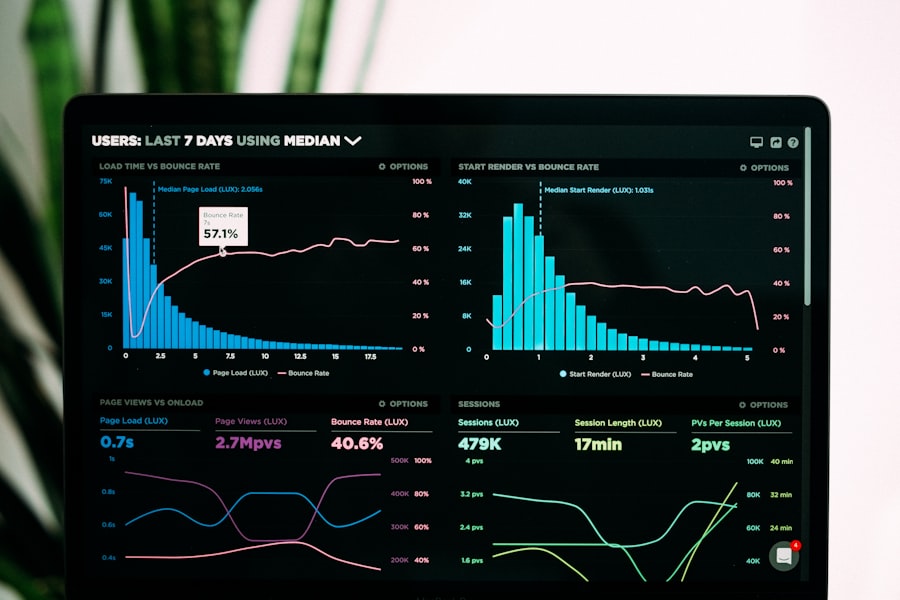
The "Performance" section of your Google Business Profile is one of the most underused tools in local SEO. Most owners glance at the total views and move on. Here's what to actually look at:
Search Queries (The Hidden Gold Mine)
Under Performance → Searches, you can see the actual search terms people used to find your listing. This is keyword research that's already validated by real customer behavior. If you see terms you're not ranking well for, add them naturally to your business description, services section, and posts. If you see zero-volume search terms dominating, it means your category or description is pulling the wrong audience.
Direction Requests vs. Website Clicks
A high number of direction requests relative to website clicks signals that people are ready to visit in person, meaning your conversion happens offline. A high website click rate with low direction requests suggests people are still in research mode. Each scenario demands a different content strategy: the first needs operational clarity (hours, parking, wait times), and the second needs trust signals (case studies, team bios, pricing).
Call Clicks Over Time
If call clicks suddenly drop, it could mean your phone number was edited by a third party (competitor abuse), your listing was soft-suspended, or simply that your business hours are now misaligned with when people search. Cross-check any call drop with edits made in the same period.
Photo View Benchmarks
GBP shows you how your photo views compare to "businesses like yours." If you're consistently below the benchmark, it usually means you have too few photos, they're low quality, or they've been flagged and suppressed. Aim for at least 20 to 30 real, original photos: storefront, interior, team, product or service shots, and behind-the-scenes. Businesses with more photos get significantly more direction requests and website clicks on average.
7. Posts That Actually Work (And the Type Google Quietly Deprioritizes)
GBP Posts are a free, direct way to appear more prominently in your knowledge panel and sometimes in the "Updates" section of local results. But they're not all treated equally.
- What works: "What's New" posts with a clear call-to-action, Event posts for actual upcoming events, Offer posts with a real discount code and expiry date.
- What gets suppressed: Posts that include phone numbers or URLs in the body text (Google has filters for this), posts that use all-caps headlines, posts with stock images or watermarked photos, and posts that look identical to previous ones (copy-paste recycling).
- Underreported: Posts expire after 7 days (except Events and Offers). An expired post graveyard doesn't hurt you directly, but publishing a fresh post every 5 to 7 days signals to Google that the business is actively managed, which feeds directly into the "prominence" ranking signal.
8. The Review Velocity Problem
Reviews are the most visible trust signal on your GBP, but their velocity matters as much as their volume. Getting 50 reviews in one week after months of nothing is a red flag to Google's spam detection systems, even if every single review is genuine.
Google's review filter will hold or remove reviews that arrive in suspicious patterns. The reviews don't appear as "deleted." They simply vanish from the public count while remaining visible to the business owner in the backend for a period.
The safest strategy is consistent, steady review acquisition: 2 to 5 per week over months, rather than bursts. Ask for reviews immediately after a positive interaction, before the customer forgets. Use a short, direct URL (available under your GBP dashboard under "Ask for reviews") rather than sending people to hunt for the review button themselves.
Underreported: Replying to every review, including negative ones, within 24 to 48 hours is treated as an engagement signal by Google. Businesses that reply consistently show higher listing visibility over time compared to those that don't respond at all. It also builds human trust that no algorithm can fake.
9. The Service Area Business Problem
If you're a Service Area Business (SAB) such as a plumber, electrician, cleaning service, or any business that travels to customers rather than having customers come to you, your GBP visibility challenges are fundamentally different from a storefront business.
Google hides your physical address from the public for SABs (which is correct), but this also means you have a weaker location signal. To compensate:
- List every city and district you serve in the Service Area section. Be specific: "Delhi NCR" is weaker than listing each district individually.
- Create location-specific landing pages on your website for each area you serve, and ensure your GBP website link points to the most relevant one.
- Accumulate reviews that mention specific neighborhoods or cities ("He came to Lajpat Nagar and fixed...") because these hyper-local review signals help enormously.
10. The One Thing Almost Nobody Does: Monitor Competitor Edits
Google's crowdsourced editing system means that anyone, including your competitors, can suggest edits to your listing. Google sometimes auto-approves these edits without notifying you. Your business hours can be changed. Your phone number can be replaced. Your category can be shifted.
Set a calendar reminder to check your GBP listing from an incognito browser at least once per week. Compare what's publicly displayed against what you have in your dashboard. If you spot unauthorized changes, correct them immediately and flag them through the GBP support channel. Persistent, repeated false edits from the same source can be reported to Google's Trust & Safety team.
Final Checklist: Is Your GBP Working For You?
- Verified and no pending re-verification requests?
- Business name matches your real-world name exactly (no keyword stuffing)?
- Primary category is the most specific match available?
- At least 5 secondary categories added?
- Description uses natural language with core services mentioned?
- 20 or more original, high-quality photos uploaded?
- At least one new Post published in the last 7 days?
- All reviews replied to within 48 hours?
- Phone number, hours, and website checked this week from incognito?
- Performance → Searches reviewed for new keyword opportunities this month?
If you can check all 10 boxes consistently, you're doing more than 90% of businesses on Google Maps. The algorithm rewards sustained attention, not one-time setup. Treat your GBP as a living, managed channel and it will return the favor in visibility, calls, and foot traffic.
Have a question about your specific GBP situation? Drop it in the comments below. Real answers, no fluff.
You Might Also Like

Is Your Website Built for Google or Built for Customers?
A website should satisfy both search engines and customers. Learn how to balance...

Why Visitors Leave Your Site in Under 10 Seconds
Visitors make a quick judgement about your website. Discover the common reasons ...
