

Signs Your Business Is Falling Behind Online Without You Noticing
The scariest kind of business problem is not the one that announces itself. It's the one that builds quietly for twelve months while everything on the surface still feels roughly fine. Referrals still trickle in. Regulars are still regulars. Revenue is not crashing, it's just sort of plateauing in a way that's easy to explain away with "the market" or "seasonality" or "we need to push harder next quarter."
Meanwhile, online, in the place where your next five years of customers are making decisions about who to hire, something is slowly going wrong. And because it's happening gradually and mostly invisibly, most business owners don't clock it until the gap between them and their competitors has become genuinely difficult to close.
This is not a doomsday piece. It's a checklist of specific, observable signals that the ground is shifting under your business online, most of which don't show up in your daily routine unless you're actively looking for them.
Sign 1: You Cannot Remember the Last Time a New Customer Said They Found You Online
When did someone last call you, fill in your form, or walk through your door because they searched for your service online and you came up? Not a referral. Not an existing client. A stranger who found you through Google or social media marketing with zero prior knowledge of your business.
If you have to think hard to remember a specific example, and that example is from a year ago, that is not a slow patch. That is a signal that your online presence has quietly stopped pulling new people into your world. The referral pipeline might still be running but referrals have a ceiling. Businesses investing in local SEO services and Google Ads management are filling that gap with a consistent flow of new strangers every single day. If that channel has gone silent for you, you're running on borrowed time from the relationships you already have.

Sign 2: Your Website Looks and Reads Like It Was Written for 2019
Not just designed in 2019. Written for the mindset of 2019, where people were more patient, more trusting of corporate-sounding copy, and less likely to have three competitor tabs open at the same time. The internet has moved significantly in the last few years in terms of what visitors expect the moment they land somewhere new.
The signals of an outdated website are not always visual. Sometimes the design is fine but the copy reads like a brochure. "We are committed to delivering excellence" type language that communicates exactly nothing specific. Sometimes the site is beautiful but there's no social proof, no names attached to testimonials, no results anywhere. Sometimes the site simply hasn't had anything new on it in eighteen months, which in 2025 tells a visitor that either nothing is happening here or nobody is paying attention.
Visitors make these judgments in seconds. If your business website hasn't been redesigned or rewritten in over a year, it is likely costing you credibility with every person who lands on it. A professional web development service that builds for conversion and speed, not just aesthetics, is what separates sites that look the part from sites that actually perform.

Sign 3: Your Competitors Are Showing Up Everywhere You're Not
Go search for the main thing your business does, in your city or industry. Not your company name. The actual service. "Accountant for small businesses Manchester." "IT support for dental practices." "Digital marketing agency for e-commerce UK." See who comes up on page one. If your competitors are sitting in the map pack, the Google AI Overview, and positions one through five in organic results — and you are on page two or three — that visibility gap translates into a very specific number of lost enquiries every single day.
Now check their social media. Look at how recently they posted. Check if they are running PPC advertising campaigns on Google or Meta. Look at how many reviews they have. This is not about imposter syndrome. It's about being honest about what a potential buyer sees when they compare options — because they always do — and what that comparison costs you when you lose it.
Businesses that invest in technical SEO and organic search optimisation compound that advantage month by month. Every month you do not, the gap widens — automatically, quietly, while you sleep.
Sign 4: Your Google Reviews Have Basically Stopped Coming In
Google reviews have become one of the primary trust signals for any local or service business. Not because every review is genuine, but because the volume and recency of reviews tells a new visitor something specific: other real people have engaged with this business recently and thought it was worth their two minutes to say so.
A business with 47 reviews, the most recent from fourteen months ago, signals something uncomfortable. Either the business has slowed down significantly, or the relationship between the business and its clients has cooled to the point where nobody bothers. Neither reading is flattering, and both create hesitation in someone who was about to pick up the phone.
The fix is not manual. Pairing an active review request strategy with CRM automation and email workflows means every completed job automatically triggers a follow-up sequence that asks for a review at exactly the right moment, without your team having to remember. One of the highest-trust payoffs in digital marketing, with almost no ongoing effort once it's set up.
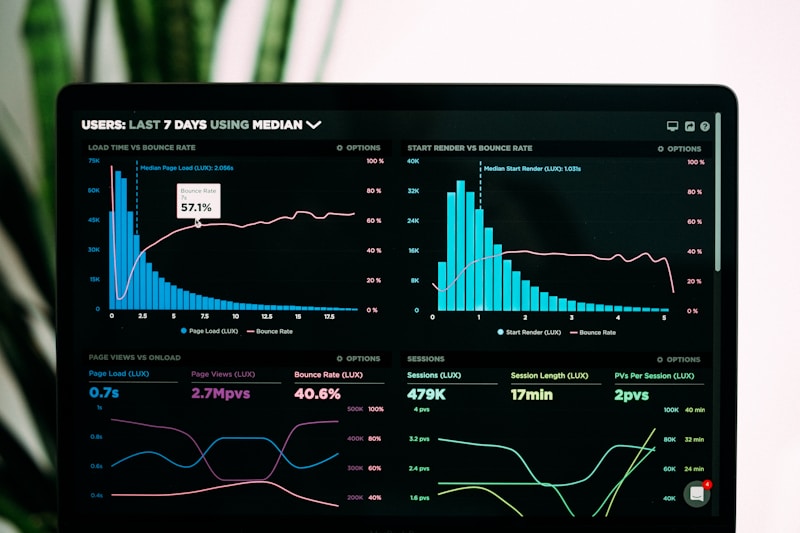
Sign 5: Your Traffic Is Flat But You Have No Idea Why
Flat traffic sounds like "nothing is going wrong." What it actually means is "nothing new is working and you haven't noticed yet." Traffic doesn't naturally plateau and hold steady in a healthy digital environment. When it flatlines, something that was working has stopped — an algorithm update clipped a page you were ranking for, a competitor took keywords you used to own, or your content has stopped earning links.
The dangerous version is when flat traffic feels reassuring because at least it's not dropping. But organic search has shifted structurally since 2023. Google AI Overviews now answer informational queries directly on the results page — the click never happens. If your traffic is flat in that environment, some sources are likely already declining and others are masking it. A proper SEO audit for your website will show you exactly which pages are bleeding, which keywords you've already lost, and which commercial-intent terms your competitors are ranking for that you aren't. That's the starting point for every structured SEO strategy worth having.
Sign 6: You Have No Idea What Your Conversion Rate Is
Not roughly. Actually. If someone asked you right now what percentage of your website visitors take any meaningful action, what would you say? If the honest answer is "I'm not sure," you are running the digital side of the business completely blind. You cannot improve something you are not measuring, and you cannot know if your website design and development is doing its job if nobody has defined what that job is in trackable terms.
GA4 is showing you exactly which pages hold attention and which ones bleed visitors. Which traffic from Google Ads or Meta advertising converts versus which bounces immediately. Which landing pages are tied to real enquiries. None of that data is being used if nobody is looking at it, so it just quietly piles up as evidence of a problem nobody is investigating. A free website audit is the fastest starting point — it shows you exactly where your site is losing people before they ever reach a contact form.
Sign 7: Your Social Media Exists But Does Nothing
Posting consistently feels like a strategy. It is not. There is a version of social media marketing for businesses that creates measurable pipeline — building an audience that recognises your brand, trusts your expertise, and eventually either enquires directly or sends someone who will. And then there is posting three times a week because someone in the business feels like they should be posting, collecting twelve likes from the same followers every time, and never once tracing any of it to a call or a form submission.
The second version is not a presence. It's the appearance of one. It looks busy in the way that a hamster wheel looks productive. Platform-specific social media strategy built around buyer journey stages — not a one-size content calendar — is what separates social that builds pipeline from social that just burns time.
Sign 8: You're Losing on Speed in a Way You Can't See
Your website loads in about four seconds on your office Wi-Fi, on a computer that's already cached most of the assets. A new visitor on a mid-range Android device on a standard 4G connection is waiting six or seven seconds. Most of them have already left by second three.
Google's Core Web Vitals data is unambiguous: every additional second of load time reduces the probability of a visitor staying and taking action. The visitors who bounced before the page finished loading barely register as a visit in your analytics. They just quietly never became customers and nobody in your business knew they'd been there at all. A custom website built on a modern stack — Next.js, React, or Webflow engineered for sub-2-second load times — removes this entire class of problem permanently, not with a plugin patch that degrades over time.

Sign 9: The Enquiries You Do Get Are Lower Quality Than They Used to Be
Very easy to dismiss as "the market" or "tighter budgets out there." Sometimes that's true. More often it's a sign that your online positioning has drifted without anyone noticing. The content you rank for, the paid ad campaigns you run, the audiences your social media content attracts — all of it shapes the type of person who decides to reach out. Change any of those inputs, even passively through neglect, and the output changes too.
If you've started getting more tyre-kickers, more price-shoppers, more people who ghost after the first call, the cause is usually in the targeting layer. An old blog post that now drives significant traffic but pulls in the wrong audience. Homepage copy too generic to filter out wrong-fit prospects. CRM with lead scoring and pipeline segmentation surfaces this pattern in the data before it becomes a revenue problem — instead of realising six months in that you've been spending time on enquiries that were never going anywhere.
Sign 10: You've Been Meaning to "Sort the Website Out" for Over a Year
Every business has a mental list of things that need doing. The website redesign that keeps getting pushed to next quarter. The Google Business Profile showing the old address. The review requests nobody's sending. The blog that was supposed to go out monthly and hasn't been touched since last spring. The on-page SEO optimisation that was on the to-do list before the quarter got busy.
Each of these is a small thing individually. Together, they compound into an online presence that is measurably behind where it could be, and the longer they stay on the "eventually" list, the more ground gets handed to competitors who are doing those same unglamorous things consistently. The gap between a business that does the boring digital maintenance and one that keeps meaning to is not dramatic month to month. Over two or three years it becomes very difficult to close — and expensive to recover from.
None of This Is Irreversible. But It Is Time-Sensitive.
The nature of falling behind online is that the gap grows faster than it closes. A competitor six months ahead in Google search rankings, review volume, and content authority takes more than six months to catch once you start. The compound interest works in their favour the longer you wait.
None of the signs above require a total rebuild or a massive budget to start addressing. Most of them start with looking honestly at what's actually happening — pulling the data, reading the page with fresh eyes, searching your own business name the way a stranger would. The uncomfortable part is not the fixing. It's the looking.
Start with a free digital audit of your website to get a clear picture of exactly where the gaps are right now. Or speak directly to the Prabisha team about what a structured recovery plan looks like for your market, your budget, and your timeline. The business that finds the problem first is always in a better position than the one that waits until the problem finds them.


